Decode Behavior/Programs/Government & Defense
Government · Defense · Intelligence

Tactical Behavioral Intelligence
for Government & Defense

Operational professionals make consequential decisions using incomplete behavioral information, often under time pressure and in adversarial conditions. This training provides a structured, science-based framework for reading behavioral signals in high-stakes operational environments.

FBI Behavioral Analysis Program APA Certified C4ISR · Delivered Army Civilian Service Award Recipient GIB · Executive Director
Program typeOperational Training
DeliveryOnsite · Classified-environment compatible
EnvironmentsFederal · DoD · Intel · State & Local
🔐
Sensitive program inquiries: This page describes the publicly available training framework. Programs delivered in classified or restricted environments can be discussed in detail during a direct consultation. Curriculum, format, and content can be customized to operational requirements and classification constraints.
The Operational Challenge

Behavioral training is rarely
provided in operational contexts.

Operational professionals are expected to read people accurately under pressure, in adversarial conditions, with incomplete information. The consequence of a poor behavioral read in these environments can be significant. Yet formal behavioral training — the kind that builds structured, reliable observational frameworks — is rarely part of standard operational development programs.

This training fills that gap with a science-based, operationally applied curriculum designed for professionals who work in high-stakes environments where behavioral accuracy matters.

Behavioral reads are made without structured frameworksExperienced professionals develop observational instincts over time. But instinct without a structured methodology produces inconsistent results — and in operational contexts, inconsistency has consequences.
Stress and deception are conflated under pressureHigh-pressure environments produce stress responses in subjects that are routinely misread as behavioral indicators of deception or threat — increasing both false positives and missed signals.
Interview and elicitation techniques lack behavioral groundingInterview skills are taught as procedural sequences rather than as behavioral systems — missing the observational framework that allows professionals to adapt dynamically to what a subject is signaling.
Rapport is built by formula rather than behavioral calibrationTactical rapport — the kind that creates conditions for behavioral signal emergence — requires understanding what behavioral responses you're producing and adjusting in real time.
Operational Application Areas

Where this training
applies operationally.

Behavioral intelligence applies across the full range of operational contexts that government and defense professionals encounter. Training content is customized to the specific operational environment of your organization.

01
Human Intelligence
Source Assessment & HUMINT Operations
Behavioral intelligence training applied to source reliability assessment, rapport-building in elicitation contexts, and reading behavioral signals during source interactions.
Behavioral baseline establishment in field contexts
Source reliability signal recognition
Tactical rapport calibration under operational conditions
02
Investigative Operations
Investigative Interviews & Interrogation Support
Structured behavioral observation training for investigative interview environments — building the framework for distinguishing stress from deception and identifying behavioral inconsistencies under questioning.
Stress-vs-deception distinction methodology
Behavioral cluster identification during interviews
Interview structure that creates signal conditions
03
Threat Assessment
Behavioral Threat Awareness
Training in behavioral signal recognition applied to threat assessment contexts — identifying behavioral indicators of stress, deception, and potential threat in individuals encountered in operational environments.
Observable behavioral threat indicators
Contextual behavioral analysis frameworks
Signal clusters under high-stress conditions
04
Leadership & Command
Operational Leadership Communication
Behavioral intelligence for operational leaders — reading team behavioral states, projecting authority under pressure, and communicating with behavioral precision in high-stakes command environments.
Team behavioral state assessment
Authority and command presence signals
Behavioral communication under operational stress
Organizational Outcomes

What trained organizations
gain operationally.

01
Improved behavioral awareness in operational contexts
Personnel develop a structured observational framework that replaces ad hoc instinct with a repeatable methodology for reading behavioral signals — applicable across every operational context they encounter.
02
More effective interview and elicitation technique
Behavioral training improves interview structure and technique — creating the conditions necessary for meaningful behavioral signals to become observable, and enabling real-time adaptation based on what a subject is signaling.
03
Stronger operational communication
Operational professionals communicate behavioral signals as well as receive them. Training builds awareness of what your own behavioral signals communicate — and how to deploy them intentionally in adversarial environments.
04
Sharper threat assessment awareness
A structured behavioral framework improves the reliability of threat assessments — reducing both false positives and missed indicators by providing a systematic method for reading behavioral clusters in context.
Curriculum Overview

What operational professionals
learn to recognize.

1
Behavioral cue recognition across channelsBuild a systematic framework for observing behavioral signals across verbal, nonverbal, and paralinguistic channels simultaneously — applicable in field, interview, and command environments.
2
Microexpression awareness and applicationRecognize the brief, involuntary facial expressions that reveal emotional states before they are verbally expressed or consciously controlled — with specific application to deception and concealment contexts.
3
Tactical rapport-buildingUnderstand the behavioral signals that create trust and openness in a subject — and the behavioral patterns that inadvertently trigger defensiveness, resistance, or information withholding in operational interactions.
4
Behavioral signals under stressDistinguish the behavioral changes produced by operational stress and fear from those produced by deception and concealment — the most consequential distinction in tactical behavioral assessment.
5
Baseline establishment and deviation detectionLearn to rapidly establish a behavioral baseline in field conditions and identify meaningful deviations — the foundational skill that makes all other behavioral observation reliable.
Training credentials
FBI Behavioral Analysis Program
Trained in the methodology used by federal law enforcement and investigative professionals for behavioral observation and deception detection.
Army Civilian Service Award
Received by Chris Michael following training delivered to U.S. Army personnel. Documented recognition of exceptional program quality and operational applicability.
C4ISR · Government Program Delivery
Behavioral intelligence training delivered across C4ISR and defense-affiliated organizations. Documented experience in operationally sensitive training environments.
Global Institute for Body Language · Executive Director
Chris serves as founding Executive Director of GIB — an independent standards and certification authority in applied behavioral science.
Schedule a Training Consultation
Training Methodology

How the training
is delivered.

All government and defense programs are built around scenario-based demonstration and operational application. Participants don't receive a lecture — they watch behavioral science operate in real conditions, then apply it immediately to operational scenarios drawn from their actual environment.

🎯
Scenario-Based Demonstrations
Live behavioral demonstrations calibrated to the operational contexts your team encounters — including elicitation scenarios, interview environments, and command interactions. Participants observe behavioral signals in realistic conditions, not abstracted examples.
⚙️
Operational Behavioral Exercises
Applied exercises where participants practice behavioral observation, baseline establishment, and deviation detection using operational scenarios drawn from your organization's environment. Exercises are designed for retention under pressure, not classroom conditions alone.
📁
Real-World Case Analysis
Analysis of documented behavioral scenarios — identifying the signals that were present, the reads that were made, and the decisions that would have changed based on trained versus untrained behavioral assessment. Applied directly to the operational context of your organization.
★★★★★
"The best presenter we have had for our troops in 20 years. Chris received an Army decoration for exceptional civilian service after his session. Our senior officers are still talking about him."
Paul J. Kassebaum
Lieutenant Colonel · United States Army
Delivery Formats

Programs built for
operational environments.

All programs are customized for your organization's operational context, security requirements, and training objectives. Classified-environment delivery available — discuss requirements during consultation.

🏛
Government Training Program
Comprehensive behavioral intelligence training scoped for agency or department-wide delivery. Includes live demonstration, operational exercises, and frameworks tailored to your personnel's operational environment.
Full-day · Multi-session · Custom scope
🎯
Investigative Workshop
Applied behavioral training for investigative and intelligence teams — focused on behavioral observation, stress-vs-deception distinction, and interview technique in operational contexts.
Half-day · Full-day · Unit-level
📋
Operational Briefing
Condensed, high-density behavioral intelligence briefing for senior personnel, command staff, and leadership teams. Maximum signal, minimum time. Designed for operational schedules.
60–90 min · Command-level · Classified compatible
Chris Michael
Chris Michael
Behavioral Strategist · Executive Director, Global Institute for Body Language

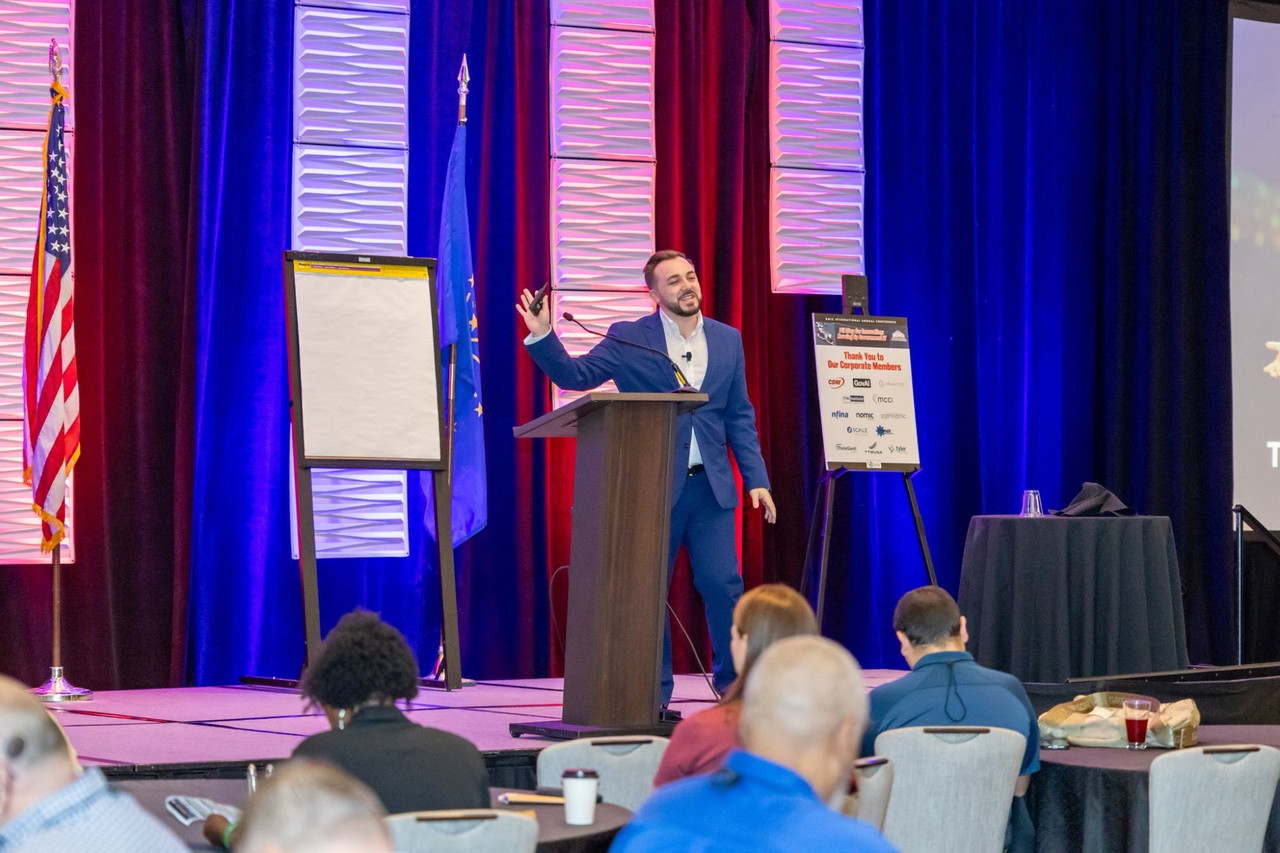
Chris Michael has delivered behavioral intelligence training across government, defense, and intelligence environments. His work applies the same evidence-based behavioral science framework across corporate, investigative, and operational contexts — with documented outcomes across all three. He received the U.S. Army Civilian Service Award following a behavioral training program for military personnel.
FBI Behavioral Analysis Program APA Certified U.S. Army Civilian Service Award C4ISR · Government Programs GIB · Executive Director
Schedule a Consultation

Ready to discuss this program
for your organization?

Submit a consultation request and receive a personal response within one business day. We'll discuss your organization's operational environment, personnel profile, security requirements, and training objectives before proposing a program.

Schedule a Training Consultation

Response within 1 business day · All environments considered