Executive & Leadership Teams

Behavioral Intelligence
for Leaders

Leaders are expected to read people accurately — in boardrooms, performance conversations, and high-stakes negotiations. Most have never been formally trained to do so. This program changes that.

Starting from$7,500
Documented outcome+10% EQ lift avg.
FormatsKeynote · Workshop · Executive Retreat
The Problem

Leaders are expected to read people.
Most were never taught how.

Executive presence, strong decision-making, and effective team leadership all depend on the ability to accurately read behavioral signals — from stakeholders, direct reports, and peers. Yet most leadership development programs focus on communication frameworks, not the behavioral signals happening in real time during conversations.

Unspoken concerns go undetected in meetingsTeam members signal disengagement, resistance, or hidden disagreement through behavioral cues that untrained leaders miss entirely.
Authority is projected inconsistentlyLeaders communicate confidence behaviorally — not just verbally. Without training, authority signals are undermined without awareness.
Difficult conversations stall or escalateLeaders navigate conflict without behavioral tools — missing the signals that determine when to advance, hold, or change approach.
Stakeholder hesitation goes unrecognizedIn board presentations and executive meetings, real concerns are signaled behaviorally long before they are spoken — or they never surface at all.
What Organizations Gain

What leadership teams
leave with.

01
Read room dynamics with accuracy
Leaders learn to assess group behavioral states — identifying who is engaged, who is resistant, and who is signaling hidden concerns — in real time during meetings.
02
Project authority and executive presence
Authority is communicated behaviorally before a word is spoken. Training builds awareness of the nonverbal signals that project confidence and command credibility in high-stakes environments.
03
Navigate difficult conversations skillfully
Leaders gain a behavioral framework for managing conflict, resistance, and high-pressure conversations — adapting their approach based on real-time behavioral feedback rather than instinct.
04
Recognize stakeholder hesitation early
Identify the behavioral signals that precede stated objections — in board presentations, one-on-ones, and executive conversations — creating space to address concerns before they harden.
05
Strengthen team dynamics awareness
Understand the behavioral signals that indicate disengagement, hidden dissent, and stress within teams — before those signals become performance problems or personnel issues.
Average +10% EQ lift in post-training assessment
Reported across leadership cohorts following behavioral intelligence training. The goal is improved behavioral awareness — not motivational development.
Curriculum

What leaders learn
to recognize.

1
Read behavioral signals during conversationsIdentify the nonverbal and paralinguistic cues that reveal the actual state of a conversation — including engagement, resistance, and readiness to commit.
2
Identify hesitation and agreement cues in real timeDistinguish between genuine agreement and compliant silence — and between productive deliberation and unspoken resistance — during meetings and one-on-ones.
3
Project stronger executive presenceUnderstand the behavioral signals that communicate authority, composure, and credibility — and develop awareness of the patterns that inadvertently undermine them.
4
Assess group dynamics accuratelyRead the behavioral state of a room — identifying the most influential voices, the resistant voices, and the undecided voices — using observable signals, not intuition.
5
Navigate difficult conversations with confidenceApply a behavioral framework to conflict, negotiation, and high-stakes decisions — adapting in real time based on what participants are signaling, not just saying.
Why this matters for leadership
+10%
Average EQ lift in post-training assessments across leadership cohorts
100+
Organizations trained across corporate, investigative, and government environments
FBI
BAP trained methodology — the same behavioral science applied to leadership contexts
Schedule a Training Consultation
What Happens During the Training

Inside the
leadership session.

This program is built around live demonstration. Leaders don't receive a framework to implement later — they observe behavioral science operating in real time, with their own peers as the subject.

👁
Live Behavioral Demonstrations
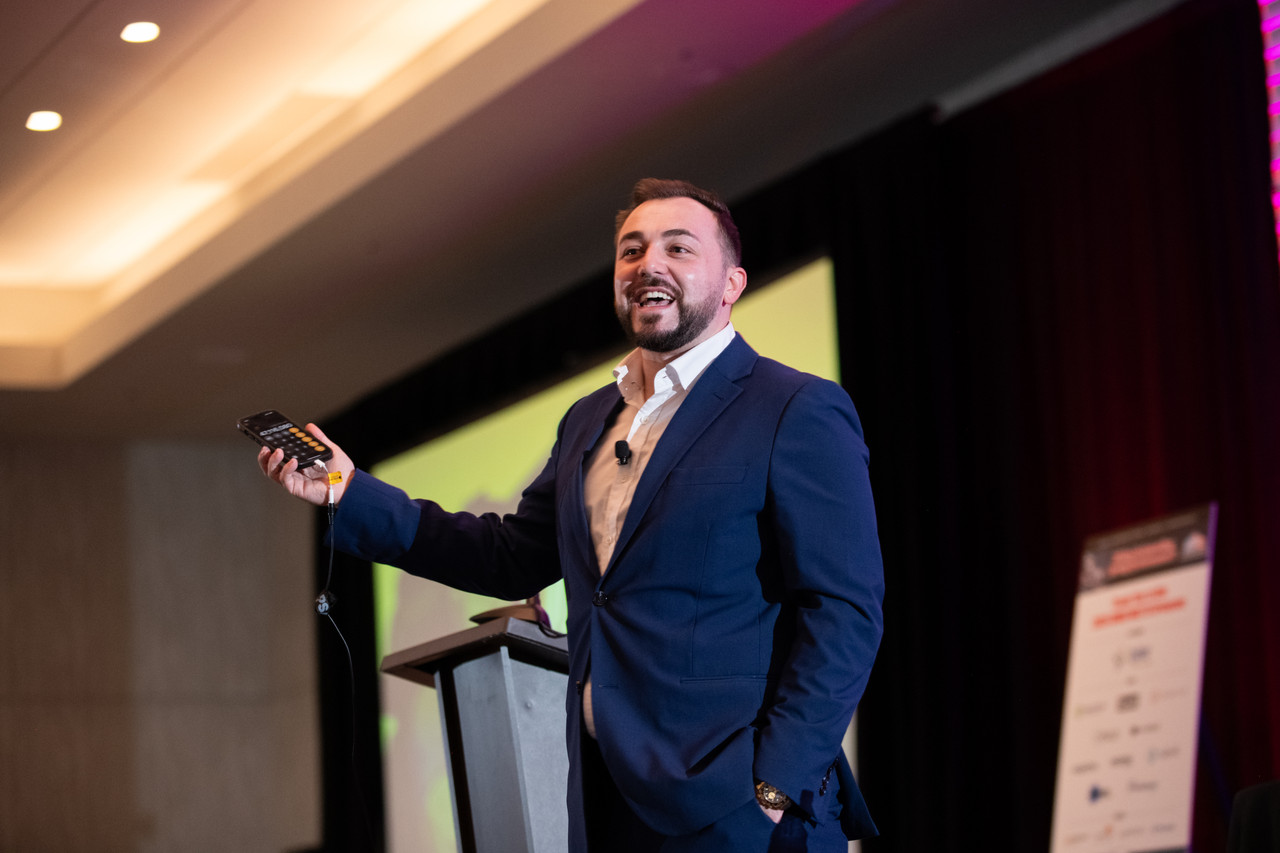
Chris performs live demonstrations using members of your leadership team, revealing how authority signals, hesitation, and hidden resistance appear in real time. Seeing is more persuasive than hearing — and these demonstrations are designed to be unforgettable.
🏛
Leadership Scenario Analysis
Teams work through real leadership scenarios — board presentations, one-on-ones, team meetings, and executive negotiations — identifying the behavioral signals that determined each outcome. Exercises are framed for your leadership context.
🔬
Group Dynamics Decoding
Interactive exercises where participants practice reading group behavioral states — identifying engagement, resistance, and hidden concerns within a room of people. Applied directly to the meeting types your leaders navigate most.
📋
Frameworks Leaders Keep
Every participant leaves with a repeatable behavioral observation framework they can apply immediately in their next meeting. Practical, not theoretical — and applicable across every leadership context from day one.
★★★★★
"The best presenter we have had for our troops in 20 years. Chris received an Army decoration for exceptional civilian service after his session. Our senior officers are still talking about him."
Paul J. Kassebaum
Lieutenant Colonel · U.S. Army
Delivery Formats

Built for how leadership teams work.

All programs are customized for your organization's structure, industry, and leadership development priorities. Available onsite or virtually.

🎤
Keynote Presentation (60–90 min)
High-impact introduction to behavioral intelligence for leadership conferences, retreats, and all-hands events. From $7,500.
🗓
Leadership Workshop (Half-Day)
Applied behavioral intelligence training with live demonstrations, scenario analysis, and practical frameworks. From $450 per leader.
🏔
Executive Retreat Program
Immersive behavioral intelligence experience designed for executive teams and senior leadership cohorts. Custom scoped.
🔄
Leadership Development Series
Multi-session program building behavioral awareness as a sustained leadership capability over time. Custom scoped for your L&D calendar.
Chris Michael
Chris Michael
Behavioral Strategist & Corporate Mentalist · Executive Director, Global Institute for Body Language

Chris Michael helps organizations understand the behavioral signals that influence decision-making. His training combines behavioral science, nonverbal communication, and live demonstration — applied across corporate leadership, investigative, and government environments.
FBI Behavioral Analysis Program APA Certified Center for Body Language · Licensed C4ISR · Government Programs
Schedule a Consultation

Ready to bring this training
to your leadership team?

Submit a consultation request and you'll receive a personal response within one business day. No obligation — a focused conversation about fit, format, and outcomes for your organization.

Schedule a Training Consultation

Response within 1 business day · Programs from $7,500